Piedmont holds a special place in Rosenthal Wine Merchant’s history: the very first wine Neal ever purchased for import was the legendary Carema from the Ferrando family, in the Alpine foothills of the region’s northwest corner. In conversation with Vinous’s Antonio Galloni, Neal leads an illuminating discussion on Nebbiolo to reflect upon its past, its changing landscape, and the traditions that continue to shape its future.
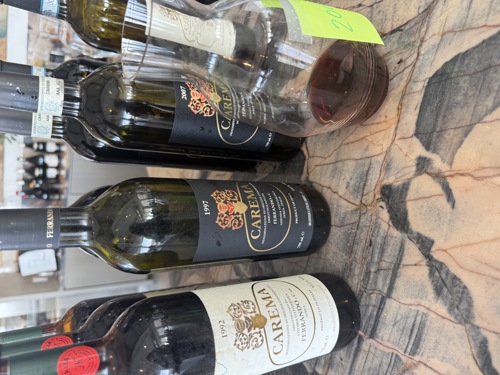
This conversation followed an intimate tasting of the wines of Neal’s Ferrando estate featuring a rare vertical that revealed the depth, character, and evolution of the historic Carema region.
Nebbiolo’s 50 Year Evolution
Neal Rosenthal:
Thank you everybody for joining us. Basically at the core of what we're going to discuss today is the evolution of Nebbiolo over the last 50 years in the Piemonte. I imported my first wines from Piedmont in January of 1980. And curiously, on that first day that I was involved in importing wine in January, I started in Barbaresco, I continued on to Carema. And for me, when I worked with these initial contacts and I was being exposed to the brilliance and the complexity of Nebbiolo and what I'm seeing today 50 years later, it's not a question of better or worse, but I do think there are so many significant changes in the way Nebbiolo is handled today and how it is expressed.
I wanted to get your first thoughts on this, what I refer to as the evolution of Nebbiolo in Piemonte.
Antonio Galloni:
Well, I think it's enormously exciting. My history is not quite as long as yours. But I was really lucky that I grew up around wine. In the 1980s my parents had a wine shop. And I would help my dad stock the shelves. My dad told me when I was a little kid that there were two great wines in the world, Champagne and Barolo. And then, he said there was a wine once that was more famous than Barolo or Barbaresco. He said it was called Gattinara. And that was the beginning of my understanding.
There's a lot of ways that I can answer your question. You could start with vineyards or appellations or things that are more technical like winemaking. I think that most people who make wine would say that so far Nebbiolo is a net beneficiary of climate change, in the reality that you have more strong vintages than you did ever before. So if you look at the sixties and you said, well, what are the great vintages of the sixties? It's two or three. The seventies, it's two or three. Now, almost every vintage is good or great. And then the ones that aren't so good, people know how to handle better. So I think that's one big change.
Another is that Nebbiolo is very difficult to de-stem. So when we drink these wonderful wines that everybody here loves from the fifties and sixties, they probably had a lot of pits and stems and things because the equipment wasn't so good. And then the fruit wasn't really ripe in the way that we might intend it today. And so those great wines from the fifties and sixties are very different from the wines of today. So I think that's changed. I think that the idea of sustainable farming is very interesting now because you have Burgundy with these frosts. And is lighting a bougies consistent with being sustainable? It's a very complex question, very complicated.
NR:
Antonio is referring to frosts in Burgundy. The frequency of frost now is dramatic because, as I've said on numerous occasions, the biggest problem of climate change is not the heat of the summer. It's the lack of winter.
So you get these early flowering and then invariably have a frost. And in Burgundy, many of the growers’ only defense is to light these sort of kerosene candles. And this is what is out in the vineyards to create some degree of warmth so that you can maintain the temperature, not more than one or two degrees below freezing. And it's highly polluting.
AG:
Relative to other things. But I think one of the other things that climate change does, it makes it more possible to farm sustainably because you have less violent seasons. So if you just looked at the copper use in Bordeaux, in a normal vintage, it would be at the extreme high of what is in Chianti Classico, let's say, because Chianti Classico is warmer, more ventilated, and so you just don't need as much stuff. Bordeaux is a different kind of climate. So I think that warmer, drier climates do have some benefit. But as you're saying, Neil, there's no more winter and the winter's important because it kills a lot of vine louses.
NR:
Then the vines go dormant in the winter when it's sufficiently cold. Then it's a fresh start in the spring.
AG:
So you've heard of the decline of Barbera in Piedmont, and a lot of that is because you don't have a winter anymore. That's the technical stuff. I think it's important.
But I think what's interesting is just all of the new producers that you see all over the place who are making wine. In the United States, it's pretty easy to make wine. You could go to somewhere like Santa Barbara and buy fruit and make a barrel or two of wine, and you're in business. And you look at a winery like Kosta Brown in Sonoma, I mean, they start off with four barrels of wine and then they become this mega thing that gets sold several times. You can do that. But in these European old traditional cultures, it's much more difficult. I mean, there isn't a market for buying barrels of wine.
And one of the things that's interesting to me about Piedmont is just the explosion of young producers making wine. In the early two thousands, there was a time when the roster of producers that you covered was pretty stable. It didn't change very much. I started writing about Alto Piemonte in 2004 or 2005. Nobody cared at all about any of these wines. Now, if a producer's missing, I'll get a bunch of emails. Why didn't you cover this producer?
But I think that's great because it means people care, but they didn't care 20 years ago. So I think that the emergence of small producers is really interesting because it's much harder to do that in traditional cultures.
I believe this is the greatest country in the world with all the problems. And the reason for that is that people here want to see people be successful. It is a fundamentally American thing that, if you start something, somebody will want to be your mentor, they'll want to help you. They'll want to say, let me introduce you to this person. And this is a country where success is celebrated.
In traditional European cultures, Italy being one of them, success is not viewed that way. People don't like to see other people be successful. They feel threatened by it. And so anytime you see a young person start something new, I think that those estates, those domaines, those producers need to be doubly celebrated. They need to be celebrated because of the quality of what they've put in the bottle, but they need to be celebrated because they have the courage to go against the enormous tide that is what they deal with every day.
NR:
Right? Today we have in front of us actually an example of what Antonio was talking about because in Carema, which is where I found my roots in Italy, in the wine world back in 1980. It was at that time only the cooperative and Ferrando, that was it. Over the last half a dozen years or so, there have been this influx of interested young people who are committed to this heroic viticulture because it is incredibly difficult to produce wine there. And they are effectively reviving and enriching the environment for this extraordinary wine that we have. That's great. And I agree with Antonio that this kind of breath of fresh air has created a vibrant marketplace with the greatest selection of wine, clearly in the United States and more specifically in New York.
Almost 50 years ago, most of the growers who have now become globally famous were either not bottling the wine or bottling a little bit of it. My first experience in Barolo was in 1981 or 1982, with an estate in Piobesi d’Alba called Tenuta Caretta. It was owned by a gentleman, Signore Veglia from Torino. He's an industrialist from Torino, and he basically had his team in place and he owned this very beautiful piece of Cannubi, which in my view is maybe the greatest cru in all of Barolo. When I bought wine in 1981 and 1982, I was buying a 1971 Riserva. So 10 years later, the wine was still available for sale. It was a wine that probably spent 60 days macerating. And, as you rightly pointed out, probably with all the stems and pits and everything else in it. It then was aged for at least five or six, and maybe even seven, years in massive 50 hectoliter botti. And I got to tell you, I love that wine. We will not see a wine like that ever again, in my view.
AG:
For a number of reasons.
NR:
And some of those reasons we can discuss and explore a little bit. But I regret not seeing those wines anymore. I miss those wines. Absolutely clear and true that we had maybe three vintages out of 10 that were excellent vintages, and the rest of it was sort of plotting through with sort of very average wine. But God, when it was great, it was great.
Carema, the Alto Piemonte, and Nebbiolo’s revival beyond Barolo & Barbaresco
NR:
Are the wines today distinctly different? And I think there are multiple reasons for that, only one of which is climate change. There are economic reasons that play an immense role in this evolution, or revolution, effectively, about what Nebbiolo represents. So the question is, put it in very simple terms, are the wines better than they were 50 years ago?
That’s one way to look at it. We certainly have a greater selection of wine. My first exposure to the Alto Piemonte was a wine from the 1962 vintage. This was in 1978, and the wine was the ‘62 vintage of Ghemme made at the co-op. I remember to this day how brilliant it was. These were extraordinary wines. They were just called Spanna. Single vineyard Spanna from 1954, 1957. From Traversagna, from Campi Rodii. These were astonishing wines and are really what made me fall in love with Nebbiolo. But these are wines you also cannot see today and we'll never see again. Much like the first exceptional vertical tasting I was ever invited to, which was back in 1978 when Jean-Pierre Moueix came to visit the states. And I had the good fortune of being invited, and we had a vertical of Petrus from 1975 to 1952. I mean remarkable. Those wines were 12%–12.3%, maybe 12.5% alcohol. Those are wines that we will never see again. Are we the lesser for it? I don't know. What do you think?
AG:
I think that the 60 day macerations and all that, I mean a lot of people think that's a conscious decision. My view is that it's a little romanticized because most of these estates were farms that had hazelnuts, apricots, livestock, and grain. And when people say we didn't take the skins off until Christmas–which is a kind of common refrain–my view is that they were too busy doing the other work on the farm, not somebody sitting in front of, as you would see now, with an Excel spreadsheet and sort of mapping the number of days on the skins. I think people had other things to do.
And wine was not that valued. I mean, Maria Teresa Mascarello told me once that her father traded a hectare of Dolcetto for a hectare of Barolo in Cannubi in the 1950s. One of the other producer friends wanted their parcels to be contiguous because it would be easier to work. And so this family traded Bartolo Mascarello a hectare of Nebbiolo in Cannubi and to have a hectare of Dolcetto that was next to their other Dolcetto. The land was the same price so the grapes were the same price. So it was an even trade. That's what Nebbiolo was back then. It wasn't this prized thing. And then even when the wine started to be bottled, because a lot of these estates are bottlers only fairly recently, like Burgundy or the Rhone, you had Borgogno and Pio Cesare and these historic houses that bought most of the fruit, but the bottlers are pretty recent.
Smaller estate bottlers, people would make the joke that Barolo was like the spice cake that everybody gets at the holidays and just regift to somebody else, or that you used to get a bottle, a free bottle of Barolo when you bought a bunch of Dolcetto. I have friends who are older than me who would go visit Giovanni Conterno. As a thank you for the visit, you would get a magnum of Monfortino. The reason why the wine spent five years in casks is that it didn't sell. And the tradition was you would only bottle the wine when you had sufficient sales to have a bottling. And so that's why Gaja has those very famous Infernot Barbarescos of the sixties, because that was the last batch to be bottled. Today, you'd like to bottle all your wines in one shot if you can. When people don't have the space to do that, they'll bottle in different batches. But that's a practical consideration. You'd like to bottle everything at once. But back in those days, people bottled the wines as they were sold.
I love those wines, but I think that today there's just much more choice. And I think watching young people pursue their dreams is something that I personally find inspiring. This whole area of Italy's North is tremendously wealthy because of industry, textile, finance, financial industry, manufacturing, and there's an intense competition for people. So people, young people will only go do something if they think they can build something that's of value. That doesn't mean you have to be a hedge fund billionaire, but it's got to be economically viable. And so I think it's important that those opportunities exist.
NR:
Which is why the wines of the Alto Piemonte are now being revived. The fame of Barolo and Barbaresco in the Langhe has been bound to the benefit of the Alto Piemonte because from 1900 to 2000, 90% of the vineyards in the Alto Piemonte were abandoned for multiple reasons, but primarily because the farmers couldn't make money growing grapes. And then when the textile industry established itself in Biella, which is the main city in the Alto Piemonte, everybody had a job in a factory and they forgot about the farming thing and everything was abandoned. Now because there's value in wine again, people are going back and reviving vineyards.
AG:
So these people were working in textile factories or in Torino for cars or Alba for Ferrero, the Nutella factory. All you have to do is drive through there and you smell Nutella. Those were steady jobs that paid like a dependable monthly income and very different, difficult times. This discussion of whether the wines of the past are better than the wines of today. I think it always comes down to if you get that one bottle that's magical, there's nothing like that. But if you lined up 30 or 40 wines, you would much, I think rather have the wines of today than the wines of the past. On top of which, those periods of the fifties, sixties, those were much more economically uneven periods.
Some people were starving, but then the people who had money had an enormous amount of money. There was a lot of wealth differential. Whereas now, a young person really can start to make wine. I think the biggest challenge to making wines like this is that the parcels are so small. If you want to make a wine in a large format cask, how do you fill it? Because Mother Nature does not necessarily give you exactly the grapes that you need to fill a vat, a botti, or even a tonneau. So I think that's one of the challenges because this area has all of Alto Piemonte, but also in Carema, where you have these small plots of land that were divided by families over multiple generations. I just did this article on Ferrando wines a few days ago. I did a lot of research talking to people and there were about 100 owners in an appellation with 20 hectares, 16 hectares, depending on the period. So you're talking about rows of vines on mountainous rock. These are terraces built by mining families. If you go there today, you have to be really fit to walk those terraces. It's stone steep, so it's really hard. Other places in Alto Piemonte and Carema are easier to work.
One of the things I love about this area is if you think about how many world-class regions are accessible within an hour drive from an airport, there's not very many. There is Champagne because, as anybody who knows ,in Paris, the minute you get on the highway, it's like you're in Champagne, but it's not the part of Champagne that you want to be in. But you can land in Malpensa and in 45 minutes you are having a great meal somewhere or visiting whatever estate you want. If you want to go to a smaller estate, you have smaller estates. If you want to go see the Nervi temple, you can go there. There's the Lago d’Orta. And there's some wineries where you can buy wine like Boca. Christoph Kunzli, he's also an agent for a lot of top producers. So he'll sell those wines in his shop. One of the reasons I thought that this region should really take off is if you think about where you could really build a fantastic tourist infrastructure around high quality artisan wine…
NR:
In fact, talking about young producers, the best place to go is the Alta Piemonte because you can't buy prime vineyards in Barolo and Barbaresco. Nobody can afford that anymore. You can buy prime vineyards in any of the half a dozen elite appellations in the Alta Piemonte.
AG:
Yeah. I think every year there's more and more producers to taste, and it's a challenge, but I find it really invigorating. So I think that there's a lot of things to get excited for. And I think just to wrap up on the importance of this market, I know that when we do our Barolo event in January, a lot of the winemakers will say there's just no market like New York. And these are people who now go everywhere. They come back and say there's just nowhere like New York because you have consumers, especially older consumers who are buying these wines, who own them, who want to share them. And there's just a tradition here. Maybe it's an ethnic connection, I'm not really sure, but you were talking about the early days of Barolo. These families, like Vietti, Gaja, were coming here when they had to really promote their wines and they built the foundation of all these restaurants and sommelier and older collectors.
NR:
I had related, actually Antonio, earlier today when we were doing this tasting about the fact that when I first engaged with the Brovia family in 1982, when the first vintage I bought from them was 1978. Over a period of years, I ended up having a 10 year vertical of cru Barolos in stock because nobody was buying these things. And they weren't expensive, but nobody was buying them. And now of course, everything is allocated and it goes out at expensive prices. And if you don't claim your few cases or bottles early on, forget it. You're not going to get it.
AG:
This is one of the things that's changed. Because the wines are more approachable now, people taste them and say, oh, I really like this. The wines that my dad opened when I was a kid were like battery acid. And back in the day, it wasn't that long ago that in Piedmont, you wouldn't even put a wine on a list until it was 10 years old. They just weren't pleasurable. Today, it's a different story. So what happens? A really high quality vintage comes out like ‘10 or ‘13 or ‘16 or whatever, that you can actually taste young. Maybe you wouldn't say that the wine is at its peak, but you can certainly get something from the wine. And then you have all sorts of people saying, I've never bought Barolo, but I'm going to buy a case or two, or Barbaresco, whatever it is. And then as that accumulates, the combined effect of that is what shifts the market. So the wines are–people are drinking the wines younger because they are more delicious younger. And that has broadened the audience for the wines.
NR:
I go back to my history here. I think once money became so precious, it accelerated because everybody along the line had to turn their inventory over more rapidly. The result of that, in my view, is that there were changes to the way wine was made. So it's not just a matter of, oh, well climate change and this, that, and the other thing. It was a dollar and cents issue in a lot of ways. People could not afford to hang onto the wine. Just think about in our case with Ferrando, we don't release our wines for four years. You've worked today, you're not going to get paid for four years.
The cost of that is a lot. That's an expensive proposition. So when you're dealing with that kind of thing, of course it makes sense to change the regulations so that you can release Barolo now after three years instead of four years or five years, there's no more Riserva because nobody's releasing Riservas after five or six years because they can't afford to keep wine that long.
My regret, and what I think bears a little discussion here is that when the wines start to become modified this way, do they lose a level of complexity? Do they lack some of the longevity that was built into some of the other wines? I'm not certain about the answer to that, but it's something that I reflect upon. I sometimes am not particularly attuned to wines that are too easy to drink. And I think there's a tendency now to make wines very approachable. And when wines are produced in an approachable manner, I think they are reducing the possibility for development.
AG:
I think the age worthiness is a question for sure. But I mean a lot of people think that too. But on the other hand, you have whole new groups of people who are getting used to the wine, who are getting exposed to the wine. And I think that you have more types of cuisine than ever before and more types of places in the world and the wines have to find an outlet. Carema is not the best example because even if they double the surface area, it's still a drop of wine. But if you were to go and look and say, well, let's look at the production of bottles a year in Barolo over the last 20 years, it's always up. It never goes down. Barbaresco, same thing. And I think that's a challenge. Do I think we're going to get the wines that we had in the sixties or seventies? No, they're totally different.
But you still see people making wines with field blends and in more non-commercial ways that I think are really appealing. I think there's a lot to discover.
NR:
I think it's very exciting. For me, when I look at the Alta Piemonte, we've had a vibrant discussion internally at Rosenthal Wine Merchants. We had two producers in Lessona. Most of the people on my side in our little world of Rosenthal Wine Merchants are less happy with Massimo Clerico’s wines than I am because I grew up with wines that are aged long and maybe lack that level of freshness. But, in my view, they have a little bit more potential for developing complexity. Then we have the lovely wines of Andrea Mosca from Noah that are a very different rendition of Lessona. It doesn't mean they're any less expressive of the terroir, but they evolve differently. They have a different approach to life in a certain way, and they're fresher and they're more charming early on.
AG:
A lot of people would say Lessona is the noblest terroir of Alto because of the sandy soils, more silky, elegant wines.
NR:
Very silky tannins.
AG:
I think if Lessona was in the hands of more high quality producers, it would be possibly even more famous than Gattinara or Ghemme because the wines are a little bit more aromatic and I think lighter in the sort of style. It's really contemporary now. But one of the challenges that you have in this region is you have some producers who have real serious problems. Sella is one of them. It's one of the first producers that I went to visit maybe 20 years ago. It is owned by a very famous banking family and their quality is all over the place. When you have an important label like that, my view is always if that affects everybody else. the other one is Cantalupo, which has got some very serious financial difficulties and lack of succession and an ill owner. I used to love those wines and now those are all over the place. Clerico does longer aging, so sometimes somewhat oxidative in style. Noah is more powerful.
I think the beauty is in the difference. I never want all the wines to be the same, so I celebrate the fact that the wines are very beautiful. But I think some of these appellations could use a really flagship producer because that really elevates everybody else.
The Future of Nebbiolo — Offering Value to the Next Generation of Drinkers
NR:
In my view, the Alto Piemonte represents the single greatest value and opportunity for producing great wine. You're working with the extraordinary Nebbiolo. The vineyards are 70% less expensive than if you went into the Langhe and you've got the benefits of a mountain climate that are avoiding the worst extremes of global warming.
AG:
I think some of those other varieties are pretty cool too.
NR:
Vespolina. I love Vespolina. Absolutely. And the Erbaluce, which they can't call Erbaluce in the Alta Piemonte. The Rovellotti family refers to the Erbaluce as innominabile, the unnameable. And it's just whatever they call it, sometimes Alta Piemonte Bianca. For me, this is an extraordinary area for the greatest potential in the world of wine almost right now, the Alta Piemonte, because you're working with this incredibly noble grape of Nebbiolo. And on the other side, with respect to the impact of a changing climate and a warming climate, Carema used to be the last place that you could grow Nebbiolo. Now we're seeing it stretch possibly into the Valle d’Aosta. So our producer outside of Valle d’Aosta, Grosjean, is now making Nebbiolo in Donnas, which is an official appellation, and we're going to wait and see what happens
AG:
When I go out to dinner and I am looking at wine lists, one of the places I always focus on is Alto Piemonte.
NR:
That’s the best value.
AG:
They've got the best values and the markups are not super crazy and you can drink really well.
NR:
In terms of getting younger people to appreciate these wines, I am not worried, frankly. I'm an optimist. First of all, we've been drinking wine for 8,000 years, so it's not going to disappear. Most of what we work with at Rosenthal Wine Merchants, and most of the things that are the areas of interest for Antonio, we're talking about very limited production of wine. We're talking about places like Carema. Am I worried about selling out of Carema or not selling out of Carema? Not really, because there's very little of it. And I think generally with an ever increasing global demand, because it's not just about the United States anymore, the reason why these wines are becoming more and more scarce is that there's global demand. And there are very few areas of the planet that have remained untouched by wine at this point in time. I can think of a couple that still are yet to come, but by and large, yes, there may be a certain group of younger people who are not exposed to the pleasures of drinking wine, but they'll get there. It is just such a beautiful experience to me. It's inevitable that people who love good things will gravitate to wine.
AG:
I spend as much time as I can in front of young people. A lot of people would say that very young adults never really drank that much wine in the first place. But I'll tell you that I go every year to several wine clubs of major business schools like Harvard or Stanford. And in those instances, the wine club is the biggest non-academic club that they have.
The other thing that we focus on, is female consumers for wine. And the reason is that when I go to say Harvard Business School Wine Club, the two presidents are both women. And the first time I noticed this was the first time I went to Stanford. I looked at this audience and I thought, it's half women. I'm like, we don't have half women subscribers at Vinous. Not even close. And I thought we might never have that because maybe women are interested in learning about wine in a different way. But you get different questions and different contextual way of thinking about wine.
And I think that this audience has been largely completely ignored. People show up to our tastings, the most really high-end tastings that we've done. There's always women who show up by themselves. They're not interested in anything but the wine. They have incredible questions for three hours. They ask me technical questions. They're financially independent, they're interested in learning, and they really appreciate what's in front of them.
I am much more optimistic than most people, but I think we have to change the way that we speak to consumers. We have to broaden the audience. I think that one of the things that's interesting to me is to see the Michelin group expanding their coverage into other cities in America that have never had guides before. Like Boston, like Dallas. What I hope that means is that the sommeliers and the trade in Dallas, they're going to want to have better wine programs than what they have today for the future. So if I think out five to ten years, I think it's a tremendous opportunity for growth in America. Maybe it's not in New York. When I go to Nashville, I see an incredible interest in wine, so I'm not so pessimistic. I think the challenge is really from things like drinks and cocktails.
I think there's a lot of opportunity. You just have to work harder and with more purpose than before. That's a big change.
NR:
I think there's a lot of opportunity. I remain fundamentally optimistic. I would say that the biggest challenge for us at Rosenthal Wine Merchants, and the style and the aesthetic that we have behind our selection, is that to appreciate a lot of what is in our portfolio requires study. And so I think the big challenge for us is not to change what we're looking for in line, but it's to find the audience that has the patience and the degree of dedication that is necessary to appreciate what we're bringing in. Because a lot of our wines are not built for immediate consumption. And so we have the good fortune of working with a series of growers who are deeply traditional and who age their wines four or five years, six years before release. That's a very daunting task today.
For example, the Ghemme from Rovellotti. It's a beautiful thing for us to be able to present the 2017 vintage today in 2026. Wines that at eight to ten years of age that are at least now becoming who they are and able to achieve a certain level of expressing their identity. I think great wines require–and when I say great wines, I don't mean wines that have to be $300 or $400 a bottle. Greatness can be had at any particular price level, but great wines take time to express their full identity and their complexity. And that to me is the joy of what we do, that we are finding things that have, yes, it's wonderful to have a quick easy drinking wine that's delicious and you move on. But at the end of the day, I would regret it if we don't have those challenges in front of us.
AG:
Yeah, one of the cool things about Alto Piemonte is the different grapes. They are an extreme example where the range of wines that comes out in any given year might encompass four, five, maybe six different vintages. And it's pretty cool. Rovellotti is like that too. They have multiple releases, multiple vintages coming out at once. You could have a young Vespolina versus the more aged Lessona from a cru. I think markups in restaurants are challenging.
There are some issues I think that need to be addressed, but I think that there's so much opportunity for people to discover wine. When you open that key to somebody's mind and they understand what they're drinking, they will love those wines forever. It's a lot of work. I think Italian wine is one of the most interesting regions because there's nothing about these wines that's easy to understand.
These wines, if they were made in somewhere like Napa Valley, they would cost two or three times the price because American wines tell you everything. It's very simple. It's Pinot Noir, it's Chardonnay, it's Cabernet Sauvignon. In Italy, you have to do the work. You're saying, Carema, what is that? What variety is it? Where is it? And because of that, there's I think a mispricing of the wine in a sense. It's very good for anybody who has to sell the wine or buy the wine because the amount of value that's in one of those bottles relative to what that would cost if it said Grand Cru Burgundy or Premier Cru Burgundy, where it's very easy to know what the hierarchy is. It is sort of baked in. If you do the work to understand these wines, you will drink a better wine at any price than your friends who are drinking wines from those other regions where everything's really easy information. Asymmetry is a really good thing when you have the information.
But I think communication is the key to it. And I love the way that these wines are priced even in really expensive restaurants. The Alta Piemonte is great if I don't spend a lot of money on wines when I go out to dinner at restaurants. I'm not a cocktail person. I like them, but that's not what I want to have with the meal. I want to have a bottle. So the question is, where are you going to find those values? And there's multiple places, but I think that as an industry, we have to educate people into what they have, and today's audience has less time. Bombarded with information. It's a challenge. And the challenge is the opportunity.
The Promise of Piemonte Terroir and Nebbiolo’s Intellectual Hedonism
NR:
Well, I like that challenge because for me, everything has to be done with a level of passion.
And if you're not passionate about what you do, then really why do it? So what we have, our success has been based upon a dedication to a certain aesthetic, a certain concept. We don't waiver. It's been 50 years of this obsession with terroir, this joy in the knowledge that what we are working with brings incredible pleasure. The nicest thing that we can say about our little affair is that every night we know that somebody has a bottle of wine. The wine that we selected on their table. They are having a great time with it. Not many people can say that.
AG:
Can I say something about Nebbiolo though? It's a unique grape. You know why? To me? Because it's one of the few grapes in the world that could be hedonistic and intellectual.
NR:
Absolutely.
AG:
If you want to just have an incredible sort of turn on experience because of the aromatics and the intensity of a wine and its layers and its complexity, and you just want to drink something beautiful, those wines can deliver that. And if it's just two people and you want to sit in front of a bottle of wine for four hours and watch the wine. I don't like decanting red wines too much because I want to follow the wine in the glass. To me, it's sort of like a book. Why would you start the book in the middle? I want to start at the beginning and finish to the end. You take one of those wines, you're with one other person and you're having dinner and you want to watch it over four hours and discover the layers and follow the chapters. Nebbiolo can be intellectual. And if you just want the hedonistic part, it can be hedonistic. And there's other varieties that can do that, obviously. But Nebbiolo to me is just extra, extra, extra everything.
NR:
Well, we certainly have a bunch of fanatics for Nebbiolo.
Beautiful Nebbiolo is sort of in this category. It's a variety, but there are local variations on the theme.So we have a particular Nebbiolo in Carema. And it's called Picotendro, that says exactly what it is. It tells you what to expect with that. It's not a big powerful wine. It's a tender, more finesse than it's going to produce. The name for Nebbiolo in the Alta Piemonte is just Spanna. You go into the Valtellina, it's Chiavennasca. And all of these are Nebbiolo that has modified itself in all the many, many, many years to adapt to the particular conditions of that terroir. The magic of Nebbiolo in a lot of ways is that it has developed this layer upon layer upon layer of personality that expresses itself in different ways in different places.
AG:
I think so far too, pretty much all Italian grapes have proven to be, not impossible, but pretty difficult to grow in other parts of the world. I mean, Italy is the most amazing country. The wine is a reflection of a culture and of a people. And the local dishes and everything that informs what ends up in a bottle of wine is completely different. There is just so much cultural dimension in every single bottle.
NR:
I think that's a fundamental part of terroir in a sense. Terroir is not just a question of physical things. It's clearly the grape. It’s clearly the climate. It’s clearly the soil, position of the vineyard, et cetera. Those are all physical things, but clearly there are cultural imperatives, cultural touch points in each very precise area that are going to help define the way a wine expresses its terroir. For me, there is a cultural element in terroir, and there's also clearly the single human element which reflects the personality of the person who is in the vineyard working those vineyards and producing the wine. So these are less precise, perhaps less, maybe more difficult to comprehend. But they're clearly, from my definition of terroir, fundamental to the definition of terroir.
In any event, I do think that we have a challenging landscape, but I, along with Antonio, remained very, very optimistic about what we do because there's so much beauty in what we do. And great wine is a pleasure. And I always tell people that there's a reason why the classic bottle is a 750 milliliter because by and large, you need two people to drink it. And wine is always best when it's shared. And thanks for sharing this experience, Antonio. I have so much respect for Antonio. He's done some really, really great work on the writing side, exposing the public to a lot of wines they would not ordinarily appreciate. So thank you for devoting your time to us today.
AG:
Thanks for the invitation. Pleasure to be here. Thank you everyone.